The significance of patience and impatience in Buddhism
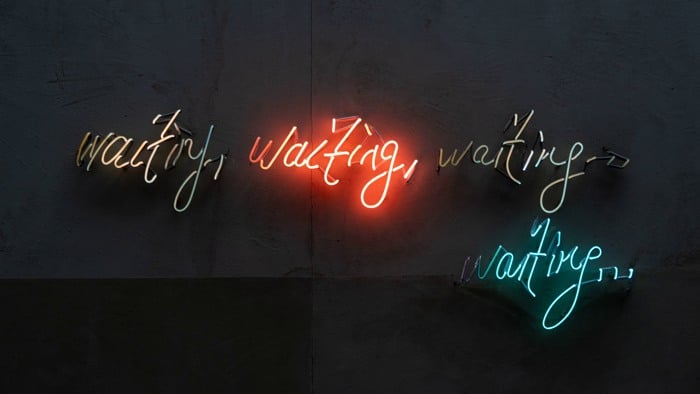
Waiting is a central and unavoidable part of life. In our fast-paced world, we have become accustomed to having many things just a click away. But regardless of whether we are standing in line, waiting for a response, or expecting a specific outcome, waiting and impatience are often siblings.
From a Buddhist perspective, however, waiting is not seen as an obstacle, but as an opportunity for growth and the development of wisdom. In this article, we shed light on waiting from different perspectives. We try to look at waiting in a completely different way, as an opportunity to practice the art of patience and equanimity.
“First I waited slowly, then faster and faster” (Karl Valentin, German comedian, 1881-1948)
Waiting – just wasted time?
Waiting is a common experience for all life on this planet. Plants wait for the right external conditions before they let their flowers bloom. Insects and animals wait for prey, people wait for trains, “the great love”, a creative idea or for an illness to improve. Everyone waits, but our reactions to it can be very different. Some find waiting frustrating and stressful and become restless, irritable and impatient (dukkha), while others approach it with a sense of calm (upekkha). When we are forced to wait, e.g. in a traffic jam or in a queue at a checkout, we often start doing something to distract ourselves from the unpleasant experience of waiting; we check our smartphone, we get lost in thought or snap at someone.
Buddhism invites us to explore the essence of waiting and our reactions to it with mindfulness. It emphasizes the transience or non-permanence of all things (annica), including moments of waiting. By recognizing the transience of our (unpleasant) waiting experiences, we can cultivate patience and accept the present moment as it is, without being captured by impatience. In this sense, times of waiting are free time for a conscious mindfulness practice.
“Enduring patience is the most important virtue (of an ethical life)” (Dhammapada 184)
Patience is more than passive endurance
In Buddhism, patience is considered a virtue and an essential quality for an ethical life that should be practiced. To cultivate patience, we must develop an undisguised understanding of our own mind and feelings. By observing our impatience and its underlying causes, we can gain insight into our desires, longings, and aversions. We may learn how much we cling to things or people we are waiting for or how little control we have over life when we or relatives are suddenly sick or in need of care.
Buddhism teaches that true patience is more than just endurance; it is an active engagement with the present moment, a willingness to accept things as they are, and a compassionate response to the suffering of others.
This is expressed in the second task of Buddha’s teaching, not to immediately and automatically react to unpleasant experiences, but to “not react”, “let it be as it is” or “let go”. In this sense, the practice of patience is an important virtue (**), as it prevents us from reacting reflexively to unpleasant experiences in an inappropriate or hurtful way.
The power of equanimity
Equanimity (upekkha) complements the practice of patience in the face of waiting. Equanimity refers to a state of mental calm and stability in which we are able to maintain balance and composure amidst the ups and downs of life. It is a state of non-reactivity and non-attachment, in which we do not allow external circumstances to derail our lives. This applies to our everyday tests of patience; this is probably only possible for a few people in extreme events.
Equanimity allows us to fully accept the present moment without resistance or judgment. It is the ability to give space to both pleasant and unpleasant experiences and to recognize that all things and experiences arise and pass away again. Through equanimity, we find a deep sense of acceptance and serenity amidst waiting.
In the context of waiting, cultivating equanimity allows us to remain centered and calm. It enables us to let go of the strong identification with desires and outcomes that often lead to impatience. Time in which we have done “nothing” or “nothing meaningful” is considered wasted time by many. We often don’t see how much our self-worth depends on having produced something, professionally, in our free time, in relationships. People who are close to us often say that the greatest gift we can give them is our presence and our attention.
Waiting and the practice of mindfulness
At the heart of cultivating patience and equanimity in Buddhism is the practice of mindfulness. Mindfulness means perceiving the present moment without judgment and encountering our thoughts, feelings, and bodily sensations with curiosity and acceptance. Through mindfulness, we become familiar with the arising and passing away of experiences, including our experiences in moments of waiting.
When we approach waiting with mindfulness, we become aware of the impatience that arises within us. We observe the restlessness, the desire for things to be different, and the resistance to the present moment. By acknowledging these human, automatic reactions without judging them, we create space for a more compassionate and balanced approach to times of waiting.
Mindfulness also enables us to explore the causes of our impatience, such as fear, a sense of powerlessness, or the belief that we have developed certain claims against others. Through the constant practice of mindfulness, we can develop a clearer understanding of ourselves and our relationship to waiting.
Waiting as a mindful Buddhist practice
Waiting can be seen as an invitation to deepen our practice. Buddhism encourages us to use moments of waiting as an opportunity for self-reflection and meditation and to cultivate virtues such as patience and equanimity for the benefit of ourselves as well as the world.