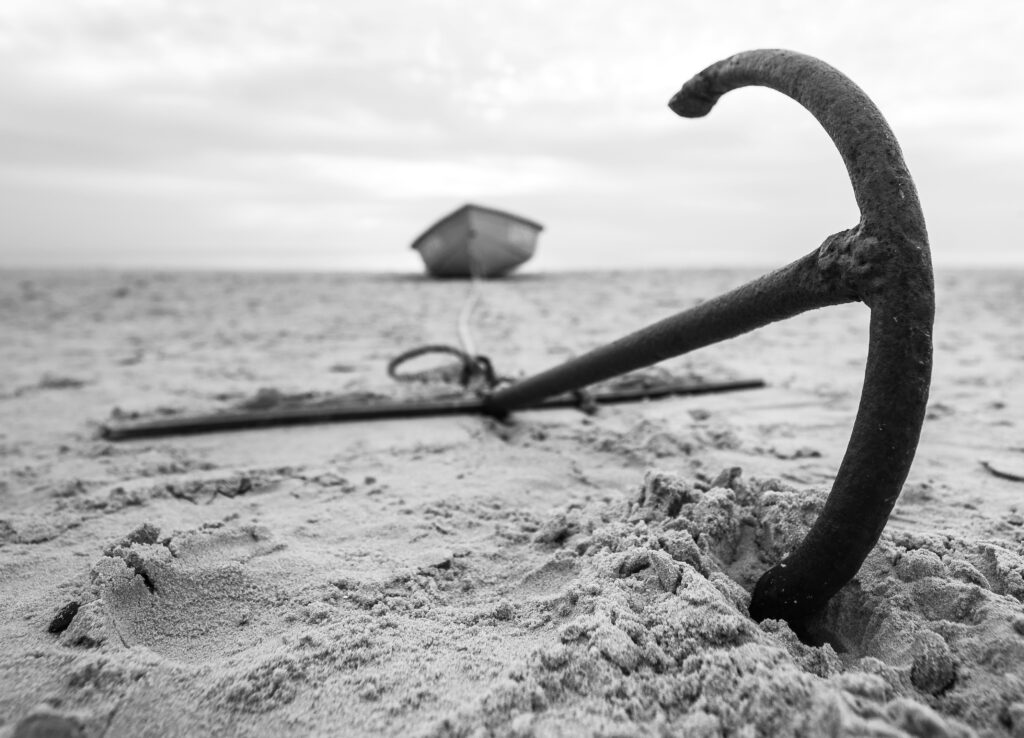
Introduction – From the Need for Protection to Conscious Life Alignment
Perhaps you have at some point been in a situation where everything felt shaky, where the uncertainty and complexity of life felt overwhelming. In such moments, the question sometimes arises: What do I hold onto?
In Buddhism, much begins right there. Taking refuge in Buddha, Dharma, and Sangha is not just a religious ritual, but a deeply personal answer to this question. Some say it is like an inner orientation, others describe it as a silent promise to no longer be guided by external circumstances, but to prioritize inner values.
Buddha, Dharma, and Sangha – The Meaning of the “Three Jewels” in Life
Taking refuge offers three points of orientation for one’s life, also called jewels because they can hold great personal value. This practice is ancient – older than Buddhism itself. To take refuge in something or someone that promises protection and offers guidance – a most fundamental human need.
Buddha: Inspiration, Role Model, and Human Potential
The Buddha symbolically represents the potential in every human to develop clarity and compassion. Taking refuge in Buddha is not a cult of personality, but a turning towards the qualities of awakening – courage, understanding, compassion – and the trust that this development is possible.
Dharma: Teaching, Practice, and Ethical Compass
Dharma refers to the teaching, the path, and the practice. Taking refuge in Dharma is trusting a path of insight that becomes concrete through mindfulness, meditation, and reflective action. Ethics here are not dogma, but living guidance. Central are the Four Noble Truths and the Eightfold Path – they offer everyday inspiration for a wholesome life.
Sangha: Community, Support, and Dialogue
The Sangha offers support, exchange, and critical guidance. It is the social space for ethical reflection and shared practice. In a modern context, the Sangha can be an online group, a meditation circle, or a spiritual friendship – central is the shared search for truth and compassion.
Ceremonial? Yes – but not necessarily
Traditionally, taking refuge often occurs in a ceremony: incense sticks, a teacher, perhaps a new Dharma name. Many also take this step quietly for themselves without anyone externally needing to notice.
When do people take refuge? This also varies. On the one hand, in Buddhist monasteries, there are specific procedures of which taking refuge is a part. On the other hand, people often understand taking refuge as their conscious step to become a Buddhist and join the teachings of the Buddha.
One’s own motivation for this comes, on the one hand, from a moment of confrontation with the confusions and complexities of the world. When we feel overwhelmed, adrift, or without orientation, it can help to take refuge in values and principles that are constant and clear. On the other hand, these instill a certain trust that there are ways to live more wisely, kindly, and wholesomely.
Refuge in Everyday Life – From Ideal to Action
Taking refuge does not mean mumbling a formula three times a day. Rather, taking refuge should manifest in our attitudes and actions as we go through everyday life. This includes:
- Taking refuge in the Buddha reminds us that we wanted to pause to look at the patterns and dynamics playing out within us and in our relationships. That we don’t necessarily have to believe internal narratives and shouldn’t act on every urgent impulse. To know: “I am more than that” and “I have options and alternatives for thinking, speaking, and acting”.
- Taking refuge in the Dhamma reminds us that there is a next possible step to take. We move beyond our “thinking about” and ask ourselves what this situation specifically needs. What qualities and perspectives would be helpful now, what is the next step to take.
- Taking refuge in the Sangha reminds us of the interpersonal qualities we can weave into our relationship with ourselves and with others: kindness, care, appreciation, and fairness. It reminds us that we don’t have to do it alone, but are allowed to seek and nurture community with others.
A Question of Responsibility
Taking refuge also means taking responsibility. One wants to grow into this own potential, and this includes the willingness to examine one’s own language, thought patterns, and actions. To develop one’s own ethical code, to identify one’s own values by which we want to act.
And at the same time, to remain human, with all its errors, incompleteness, and imperfection – the Buddha also reminds us of this when we take refuge: it is a human path, not a path of perfection.
Mini-Exercise: Three Breaths of Refuge
You can perform this exercise anytime, anywhere – whenever you need a little support and orientation.
Take a moment and feel into your body. Then take refuge in the rhythm of your breath:
- Inhaling and exhaling: I take refuge in Buddha – I have everything within me to walk this path towards more clarity and compassion.
- Inhaling and exhaling: I take refuge in Dharma – I connect with this moment and feel what is needed now. I take a small next step.
- Inhaling and exhaling: I take refuge in Sangha – I am human among humans, supported by kindness, care, appreciation, and fairness.
Feel for a moment, without judgment.
Three questions to think about further
- What could taking refuge mean for you? In what way could taking refuge be helpful for you?
- What do you usually seek refuge in when you are challenged or disoriented? What gives you support and orientation in such moments?
- What meaning do Buddha, Dharma, and Sangha hold for you personally? And if they still seem meaningless – how could you fill them with “life”?
Conclusion
Taking refuge is not an item on a to-do list that can be checked off. It is more like a promise one makes to oneself – and which one may renew again and again. Whether one makes it silently to oneself or expresses it together with others: It uplifts and aligns, provides composure and orientation, even when things are chaotic.