Buddhist Wisdom and Mindfulness Practice for the New Year
Between Sound and Silence: Bell Traditions in East and West
108 Bell Strokes and a Clear Mind – A Japanese New Year
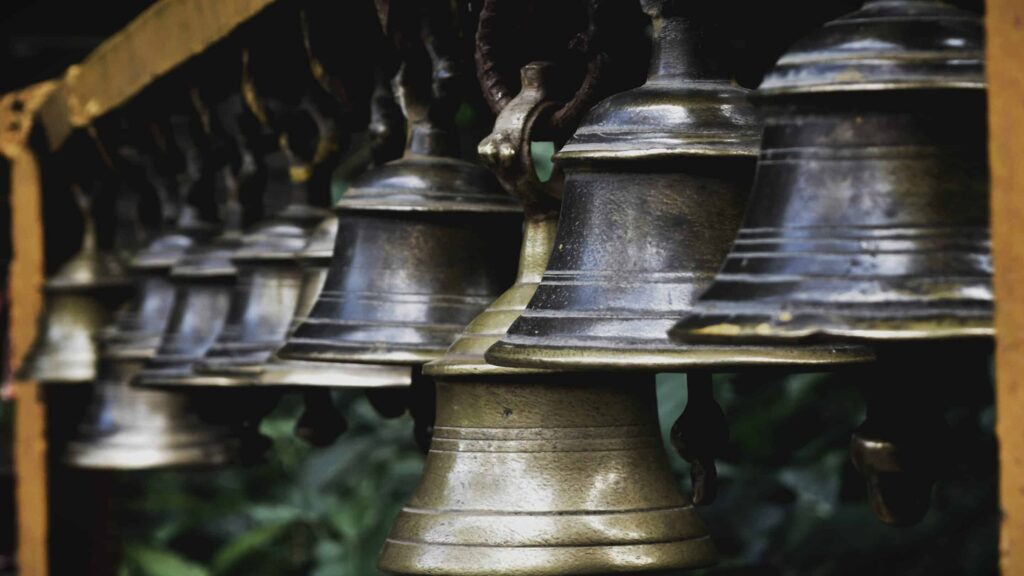
As the final moments of the old year fade and the first light of the new year draws near, the deep, resonant tones of large bronze bells ring out in Japanese Buddhist temples. Originally a custom in Chinese Zen temples, this practice has been known since 1200 AD as Joya no Kane – the ritual 108-fold striking of temple bells on New Year’s Eve.
Joya no Kane: Purifying the Mind for the New Year from Greed and Delusions
This practice symbolizes the purification of the 108 earthly desires, known as bonnō, believed to cause human suffering. By ringing the bell 108 times, people are meant to be freed from the 108 earthly desires or delusions (kleshas), which are considered causes of human suffering in Buddhist texts. Thus, the new year is meant to begin with a fresh, clear mind.
The Ringing of All Bells at Midnight for the New Year: A Western Custom
In Western cultures, the ringing of bells at midnight on New Year’s Eve or New Year’s Day is a tradition. The ringing of all bells in a bell tower at midnight not only signals the end of the old year and the beginning of the new, but also creates space for silence and mindfulness when listening to the sound of the bells.
The Universal Symbolism of Bell Ringing
The symbolism of bell ringing transcends cultural and spiritual boundaries. As a bridge between moments, connecting past and future, it arises from the human desire to mark life’s milestones with rituals.
Along with the bells, universal themes of our existence also resonate, such as the desire for renewal, transformation, or a life free from suffering and filled with happiness in the new year.
Bell Ringing from the World’s Tallest Church Spire in Ulm, Southern Germany
Become like a “broken bell” – Let silence ring
In the ancient bells of the world lies a deeper wisdom – one that speaks not only of sound but also of silence.
The Dhammapada, one of the most well-known texts of Buddhism, contains this verse (134) [1]:
“If, like a broken bell,
no longer resonate,
then you have reached Nirvana
and no hostility remains within you.”
At first glance, this may seem paradoxical. Why should a broken bell – one that cannot fulfill its primary purpose – be considered desirable? To understand this metaphor, we must delve a little deeper into the nature of the mind.
Reflect for a moment on how you typically navigate life.
Someone speaks to us sharply, and we “resound” with anger. We are praised, and we “ring” with pride. We experience a loss, and we “resound” with grief. Like a bell struck by various forces, our mind tends to resonate with every experience it encounters, and then react or respond.
Why Silence is the Key to Liberation
The metaphor of the “broken bell” offers a radical alternative. It points to a mind that remains unshakeable, like a bell that no longer sounds when struck. This does not mean becoming deaf or numb. Rather, the metaphor refers to a state of mindful balance in which external circumstances no longer have the power to “make all bells ring” within us at every turn.
That is what Buddha meant by Nirvana – not a distant heavenly realm, but a state of inner peace that is available right here and now if we learn not to constantly “echo” in reaction to life’s inevitable ups and downs [2].
New Year’s Resolutions Reimagined – More Silence, Less Noise
This teaching reminds us that what we sometimes perceive as broken or deficient could actually point us to a profound truth. Our cultural conditioning might tell us that constant activity, reaction, and engagement are signs of a life well-lived. But the wisdom of the broken bell points to something else – that true peace is found not in our ability to make noise, but also in our ability to be still.
Bells on New Year’s Day as an Invitation to Mindfulness
At the threshold of a new year, the sound or non-sound of the bells offers us an opportunity for mindfulness practice. Instead of making traditional resolutions – which often only add more noise to our already overcrowded lives – how about we resolve to become more like the “broken bell”? To help with this, we have created some practical New Year’s exercises.
Exercise Sound and Silence – Mindfulness of the Mind’s Inner Resonance
Listen to the bell ringing of Ulm Minster (video above), another bell, a gong, or a singing bowl:
– Notice the bell’s sound as it arises and transitions into full resonance.
– Notice how the bell(s) sound and how the tone transitions back into silence.
– Notice how the sound fades into silence.
– Notice how listening to the bell’s sound is accompanied by a pleasant or unpleasant sensation, or none at all.
– Notice if there is a tendency or resonance to cling to something, e.g., pleasant sensations, the bell sound, or the silence in between.
– Notice how the body feels while the bells ring.
– Notice how resonance arises to all experiences, thoughts, and sensations that appear in the mind, moment by moment.
– Let the resonances fade away like the sound of the bell(s).
Exercise Sound and Silence – Linger in the Sound, Arrive in the Silence
Use a singing bowl, gong, or similar instrument, or an app. Strike the bell once:
– Listen to the first strike and how it changes over time.
– Notice how the sound gradually transitions into silence.
– Pay attention to the moment when the sound fades into silence.
– Linger for a moment in this silence.
– Notice what arises in your awareness before you strike the bell again.
These exercises help us to understand the nature of “resonance and silence” in our own mind. Just as the sound of the bell naturally fades into silence, our thoughts and emotional reactions can also naturally subside if we do not feed them with further mental activity.
Exercise Sound and Silence – The Broken Bell in Everyday Life
Choose a typical trigger situation each day in which you practice being like the “broken bell”, e.g.:
– If someone criticizes you, pause before you respond.
– If you receive something, observe whether you can enjoy it without clinging to it.
– If you are confronted with disappointment, observe the impulse to react without immediately acting on it.
The goal is not to suppress our natural reactions, but to create a space between sensation and reaction – a moment of stillness in which wisdom can arise.
The Practice Continues
Remember that it’s not about achieving a perfect state of non-reactivity overnight if you want to become like the “broken bell.” It is a practice to which we return again and again. Every time we catch ourselves amidst the resonance, every time we create a small space between sensation, experience, and reaction, we prepare the ground for the growth of inner peace.
The new year offers us a perfect opportunity to begin or deepen these exercises. As we hear the bells ring out the old year, each sound can remind us of the possibility of silence. Every bell stroke can be an invitation to pay attention to what resonates within us and what remains still.
If you enter the new year in this way, you can discover the deep peace that does not arise from adding more sound to our lives. Peace arises when we discover the silence that is already there – the silence of the “broken bell,” the silence of a mind at rest, the silence of true peace.
We wish everyone a Happy New Year: may all beings live in safety, peace, and free from suffering!