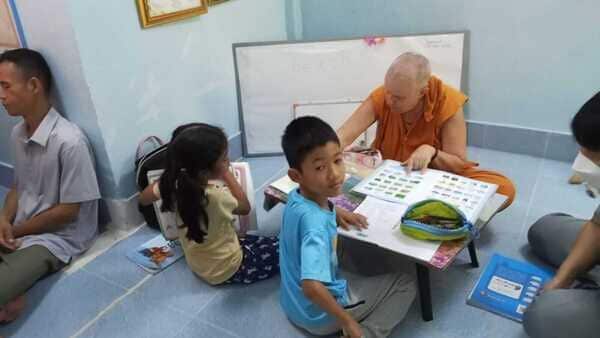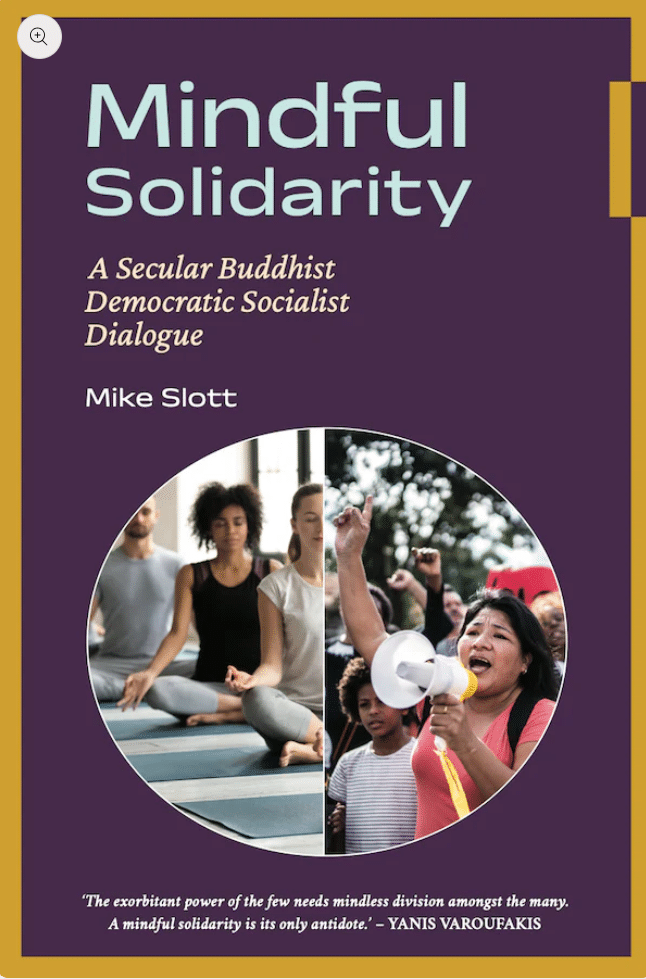
A new beginning means opening a door to spaces that were previously closed – one of many possible doors. Jochen Weber, founder of the BuddhaStiftung für säkularen Buddhismus (Buddha Foundation for Secular Buddhism), has also created a new and different style for his article: short, direct, fast, offensively TikTok-compatible. “Divisible in thirty seconds,” he writes to the editors, “but sustainable for as long as possible. So that content can land where the new beginning will be created in the future: with the young generation.”
Crises in life are normal. Today, the “quarter-life crisis” has replaced the “mid-life crisis”. New beginnings start when we realize: “It’s no good carrying on like this.” Many people, including myself, have come to Buddhism in this way. The fact that personal crises already existed 2,500 years ago is shown by the stories of the man called Gotama, later known as the Buddha.
At the age of 29, he leaves his environment because his life confuses him. He tests, rejects, begins anew: from luxury to ascetic self-torture to the “Middle Way”. From thoughts that nourish hatred to thoughts that strengthen community.
Clear method
This is not a myth, but describes a method that has been clear for 2,500 years: idea → test in practice → check effect → adapt. The Buddha works like a scientist. What is useful, stays; what is not useful, we leave. In his search, he learned that trial and error, testing and adjustment take a person further than blind faith or taking extreme positions.
The early Buddhist texts, recorded in the Pali canon, describe this openly: The Buddha learns, he fails, he changes strategy. No moralizing, no clinging – just learning in real time. Always remain open. This is the Buddha’s method for a new beginning, the teaching of the Middle Way, the Dharma.
Extreme? I’m out. My path: the middle.
Samyutta Nikaya 56.11, Dhammacakkappavattana,
Translation Jochen Weber
Trust your own experience

The Buddha therefore asks us to learn to trust our own experience. And to trust that we can achieve what he has achieved. In Buddhism, this decision is also called “refuge”. Classically, it is referred to as “refuge in Buddha, Dharma, Sangha”.
This means that Gotama (Buddha) shows what can help: the courage to experiment with the training method of his teaching (Dharma), to test it and to find the common voice for a new beginning in the community (Sangha).
In everyday life, this means: by training mindfulness, we can perceive micro-signals – the flickering impatience, the impulse to be right, the rising anger, the reach for the smartphone out of boredom … The first conscious breath then becomes the “reset button” – a new beginning.
Micro-research
We change our reactions in small steps. The Buddha suggested this in his Four Tasks (classically: Four Noble Truths) 2,500 years ago. In this way, daily experience does not turn into frustration (“I’m just like this”), but into material from which we can learn. Every day, anew.
New beginnings rarely fail because of the first step, but because of harsh judgments about failures. The Buddha invites you to keep a friendly record: Who and what triggered me? What did I try? What effect did it have on my body, feelings, thoughts, relationships? The “micro-research” doesn’t have to be epic. Three keywords on a piece of paper are enough – and a learning curve is created.
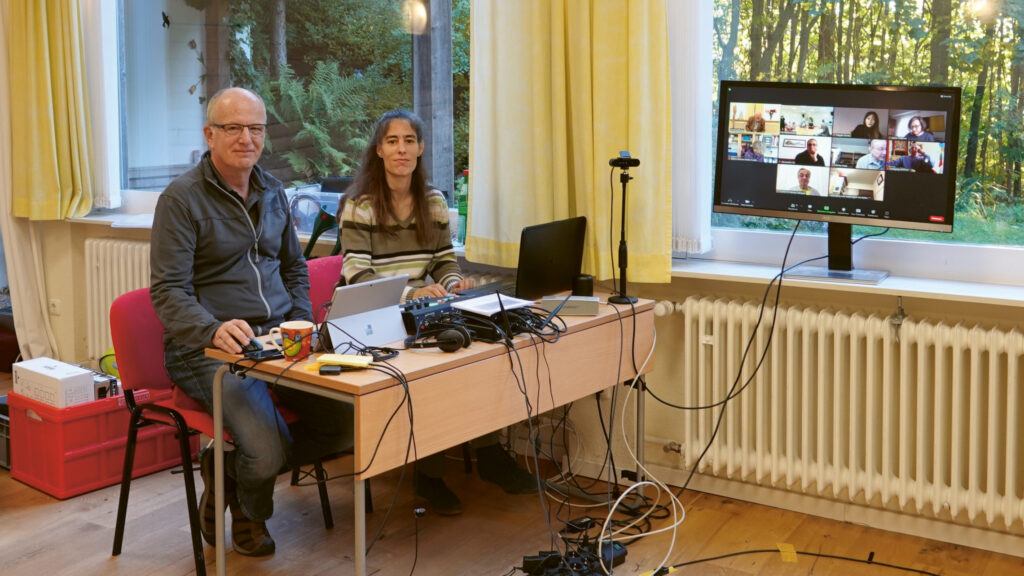
Freedom and responsibility
New beginnings need freedom. For the philosopher Hannah Arendt, new beginnings are a fundamental feature of human action and human existence – and the core of political freedom. Freedom here does not mean “doing what I want”, but being able to start, even if yesterday was different.
Freedom only becomes effective with responsibility: for the next intention, the next word, the next deed. Responsibility without freedom turns into obedience. Freedom without responsibility turns into ego culture and arbitrariness.
The secular Dharma creates the necessary leeway to interrupt automatisms and change habits. It balances freedom and responsibility: examine the effects of your actions and choose what is helpful and appropriate. Then freedom is not a political slogan, but a creative space for action for the next step.
This is exactly where the Four Tasks and the Eightfold Path come in: they translate freedom into action. The Dharma is not a world view, but a training plan for new beginnings – from the smallest habit to the turning point in life. At its core, it can be read as Four Tasks:
→ Understanding causes
→ Make quitting possible
→ Train the way
Change track
Each of these tasks can shrink to the length of a breath or fill a phase of life. A new beginning here means consciously changing the course of your life. There is no rigid “I” that is fixed, and nothing remains as it is. Classically, this is called anicca – transience. This is precisely why change is realistic and possible.
“Karma” is not a future account of destiny, but my intention in action: what trace does my decision leave behind today, tomorrow, in our lives together? Intention controls now – the Eightfold Path, Buddha’s training program, shows how.
Intentions are karma.
Anguttara Nikaya 6.63, Nibbedhika Sutta
Navigation instead of prohibition signs
The Eightfold Path is not a way up a mountain, but rather a tool wall with helpful tools. A life hack for your whole life:
→ Helpful perspective:
What’s really going on here – inside me, between us?
→ Helpful intentions:
What do I want to act for – to create safety, to hurt someone, to connect?
→ Appropriateness in communication, in my actions, in my lifestyle:
What do I do next – concrete and small? What are the consequences for me, others and the planet?
→ Helpful endeavors:
Give up harmful patterns and habits, train helpful habits – with joy and indulgence instead of tenseness.
→ Helpful mindfulness and concentration:
Keep at it without getting bogged down.
Satipatthana – the four foundations of mindfulness – make it a lasting moment-by-moment practice: noticing what arises. Break the chain of “reaction follows trigger”. Start again. It sounds simple – and is highly effective. Every moment is a new beginning.
In this interpretation, the Dharma becomes a navigation system that helps us plan new routes to discover new things – new terrain in dealing with our experiences in everyday life. The benchmark is not perfection, but effectiveness: less reactivity, more clarity through mindfulness, more care for myself, all living beings and the planet. In this way, a new beginning is not a leap into the unknown, but a step on familiar ground – only with a new direction.
Sangha here and now
Sangha, the Buddhist community, is the place where new beginnings are shared – historically, culturally, very concretely. How Sangha takes shape changes over time. After all, Buddhism has reinvented itself time and again: from India to China, to Japan and Tibet, on to Europe and into secular, pluralistic or digital spaces. Each new beginning has changed languages, images, metaphors and forms of organization. Buddha calls this “conditional emergence”.
Change is not a loss, but vitality: seeds in new soil. A seed transforms – it becomes a plant, and its growth depends on climate, soil and the gardener’s care. If the conditions change and the gardener does not react, it will eventually die.
In the West, the Dharma meets science, democracy, plurality, the modern world of work and care crises. A one-to-one import of Asian monastic structures does not work – nor does it have to. A secular new beginning here means preserving the core idea (reducing suffering, promoting insight, practising ethics) and inventing forms that suit the local rhythms and designs of life.
Don’t just go by reports, tradition or authority; examine for yourself what is wholesome.
Anguttara Nikaya 3.65, Kalama Sutta, translation by Jochen Weber
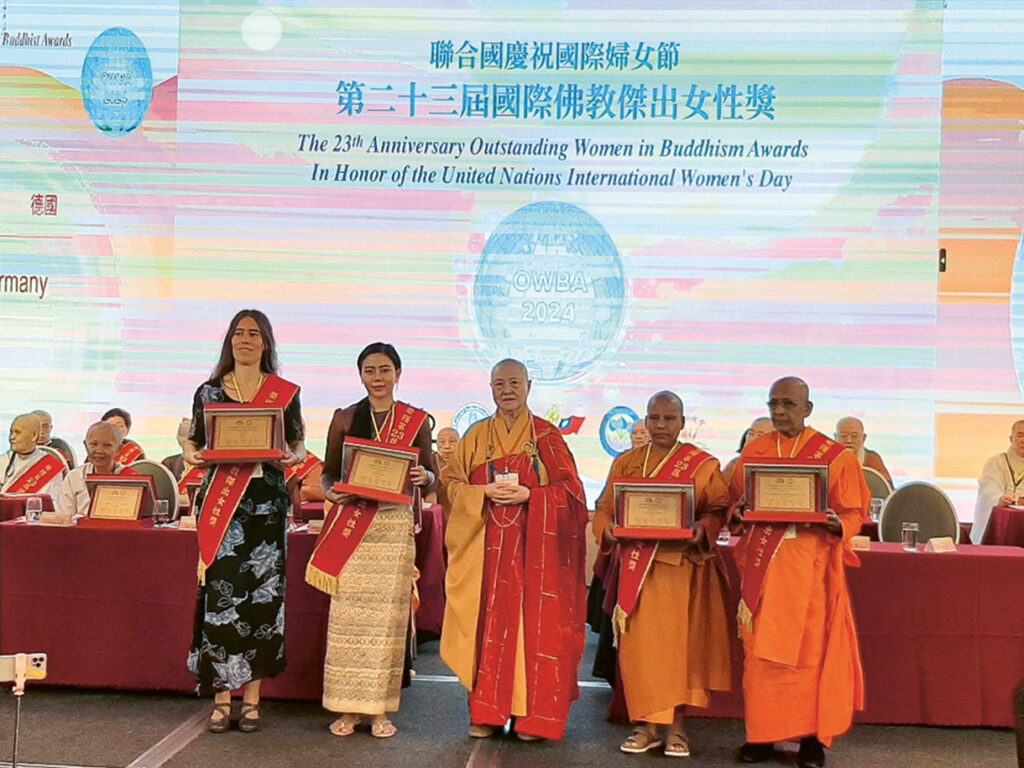
Women in Buddhism Awards 2024
Community & Experiment
Buddhist texts are also tools in a secular and pragmatic framework, not museum pieces. Texts do not contain truths, but meanings that only become accessible in dialog with those who engage with them. We read, test and reflect them on our own experience and responsibility: What changes when I recite the metta lines silently before a difficult session? How does “Appropriate Speech” affect Slack, email and meetings?
A functioning (secular) community cultivates equality, openness, democracy, diversity and appreciation. No matter what the structures are: If they have a helpful effect in the world and motivate people to experiment courageously, even if they don’t know exactly what will come of it, then everything fits.
The endless new beginning
If Buddhism is a story of new beginnings, then not as a one-off miracle, but as an everyday practice. The Buddha shows us that we can start anew at any moment. The Dharma shows us how to make a fresh start. The Sangha shows that we don’t have to do it alone.
What we need is within us: mindfulness. The intention to act helpfully. And the courage to start small and immediately. In this way, new beginnings do not become an exception, but a way of life – and a daily experience of freedom.
New beginnings from moment to moment.
Now.
Further information
Secular Dharma workshops
The BuddhaStiftung’s projects and events see themselves as workshops in which collaborative experiments can take place. These include

→ Ethicalminfulness.org as an international platform for all those interested in the Dharma, for groups and organizations to network, for events, retreats and online courses to learn together.

→ BuddhAI as a virtual conversation partner on the practice path, based on artificial intelligence. Can this work? Digital spaces open doors: people without local access, from different cultures, with care responsibilities and little time can participate. AI can also lower the threshold for entering the Dharma gate: I can ask any question without fear of revealing anything private to a person.

→ Mindfulness-Based Ethical Living (MBEL) is a moderated online course that sets joint learning processes in motion and will also be available in German on our website from mid-2026. It was developed by the global network of secular Buddhists and groups that the BuddhaStiftung has brought together around a (virtual) table.
MBEL is the navigation system for a meaningful and ethical life in a crazy world. Because it takes a little more than just mindfulness, the online course combines mindfulness with the timeless wisdom of the Four Tasks (“truths”): Recognizing Patterns, Building New Ethical Habits, Not Moralizing, Training using the tools described above. Self-selected micro-exercises that fit your own life help, for example: “When I realize that I’m interrupting someone, I take a breath, pause and say: ‘Please, you finish first’.” Or: “If a joke is made at someone else’s expense, I calmly say: ‘That’s not okay for me’ and offer a different topic.” This is followed by a mini-reflection: What was helpful? Where did it get stuck? What will I change next time?
These questions are not self-criticism, but fine-tuning. Over a period of weeks, individual moments and repetitions become a path in a new direction. A new beginning, together with others. The secular reading makes the Dharma practical and suitable for everyday life. It clarifies the view and organizes the path – alone and together.

Jochen Weber
is co-founder of the BuddhaStiftung and a pioneer of secular Buddhism, which he has been practicing for 25 years. The doctor of medicine was one of the first MBSR teachers in Germany, is co-founder of the MBSR Association and developed the MBEL course to combine mindfulness and ethics more deeply.