British colonialism as the trigger for the global Vipassana movement.
Nowadays, many assume that Buddhism and meditation go hand in hand – sometimes they are even regarded as one and the same. But even when considering the Theravadins, the founding fathers of the extremely popular Vipassana movement (insight meditation), only relatively few Buddhists in the past have considered meditation essential. Quite the contrary, instead of meditating, the majority of Theravadins and passionate Buddhists of other traditions, including monks and nuns, have focused on cultivating ethical behavior, preserving the teachings of Buddha (Dharma), and acquiring the good karma that comes from generous giving. Certainly, these people recognized the crucial role that meditation plays in awakening – from the Theravadin perspective, one cannot attain enlightenment without such a practice – but they also had no doubt that one can lead a valuable and authentic Buddhist life without meditating. Many Theravadins, who strive not for awakening but for a good rebirth, have even argued that meditation is inappropriate in our degenerate age, except perhaps for a few who live in the isolation of primeval forests or mountain caves. So where did this now ubiquitous idea that meditation forms the heart of Buddhist life originate?
This question takes us to Burma a little over a century ago. Until then, no trend towards widespread meditation had emerged anywhere. It is true that masters of the Thai forest tradition, especially Ajahn Mun (1870-1949), and figures who revitalized Buddhism in Sri Lanka, such as Dharmapala (1864-1933), played an important role in establishing the practice of insight and called for lay meditation. But they did not trigger broad-based movements. Instead, one must look to Burma to explain the development of meditation into a widespread practice – especially with regard to insight meditation. The Vipassana view understood meditation as a logical and even necessary application of a Buddhist perspective to one’s own life, whether as a layperson or an ordained person. However, the rise of this practice was not necessarily a development in itself. It arose primarily through colonial influence. (Indeed, none of the current traditions of insight practice can reliably trace their history beyond the late 19th or early 20th century.) Although it is now a global movement, insight practice began at a time of interaction between a Western empire and an Eastern dynasty. One could even go so far as to trace its origins to a very specific day: November 28, 1885, when the British Imperial Army conquered the Buddhist kingdom of Burma.
The British Empire as an involuntary pioneer of Vipassana meditation
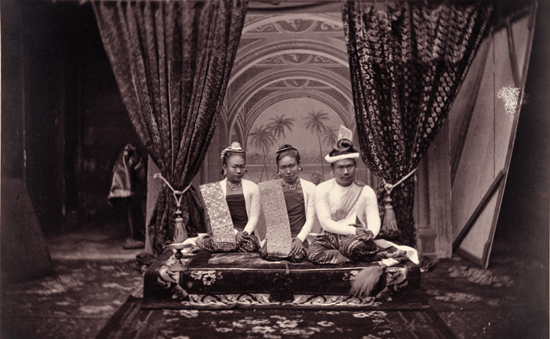
The foreign soldiers who took control of the Burmese capital Mandalay on that fateful day destroyed not only a kingdom, but also the Burmese worldview. According to Burmese belief, the last king of Burma, like the kings before him, sat on the axis of a cosmos that revolved around the throne in Mandalay. Thibaw, who reigned from 1878 to 1885, resided at the still point of the world and his primary task was to protect Buddhism. A few days after the British takeover, the Burmese subjects watched as their king, surrounded by foreign soldiers wielding rifles, was transferred on a simple ox cart from the royal palace (which had been converted into an officers’ club for drinking and socializing) to the steamship that was to take him into exile. However, the trauma of this event and the resulting profound social changes would ultimately lead to a worldwide spread of insight meditation.
Unlike in many other areas under colonial rule, the British – the Kalas or barbarians, as the Burmese called them – decided to rule directly in Burma, without a monarch ruling over them, except of course Queen Victoria, the “Empress of India.” But the Burmese could not expect the British Queen to fulfill the most fundamental task of a Burmese ruler: the promotion of Buddhism. On the contrary, Queen Victoria had issued a government directive for all colonized subjects that prohibited any support of any religion. In response to the bloody Sepoy Rebellion of 1857 in India, which was seen as triggered by religious entanglements, she decreed: “All those who hold responsibility under us” must not interfere in any way with the religions of the colonized subjects “under threat of our highest displeasure.”
To most contemporary ears, this sounds like a reasonable, even enlightened policy to ensure freedom of religious expression. However, the Burmese saw this as tantamount to an attack on Buddhism itself. Buddha-Sasana, the Pali word closest to the term “Buddhism,” simply means “teaching of the Buddha,” but has since been extended to the entire Buddhist tradition. It refers not only to the Dhamma or Buddhist teachings, but also to the embodiment of these teachings by Buddhist institutions – above all the monastic community. Like most Buddhists then and now, the Burmese Buddhists believed that the Sasana was doomed to perish. The question was not whether Buddhism would be lost, but when. Thus, the goal was to preserve the Sasana for as long as possible – the maximum limit is 5,000 years according to the commentary literature. The Theravada Buddhists believed that preserving the Sasana required a dedicated king who generously supported monks and monasteries with donations and who also ensured that both the ordained and the laity upheld Buddhist ideals. The approach of the British officials to stay out was therefore seen as a direct insult and violation of religious feelings, especially since they allowed Christian missionaries, with preferential treatment, to set up shop in Burma.
Lay people organize the departure
The Burmese did not simply accept this. After the king was gone, the laity organized themselves among themselves and gathered in associations and communities to an unprecedented extent. They conducted written examinations for monks, collected funds to feed and clothe entire monasteries, and engaged in in-depth study of the Dhamma together to counter Christian missionary criticism and preserve the valuable teachings that might otherwise disappear from the world.
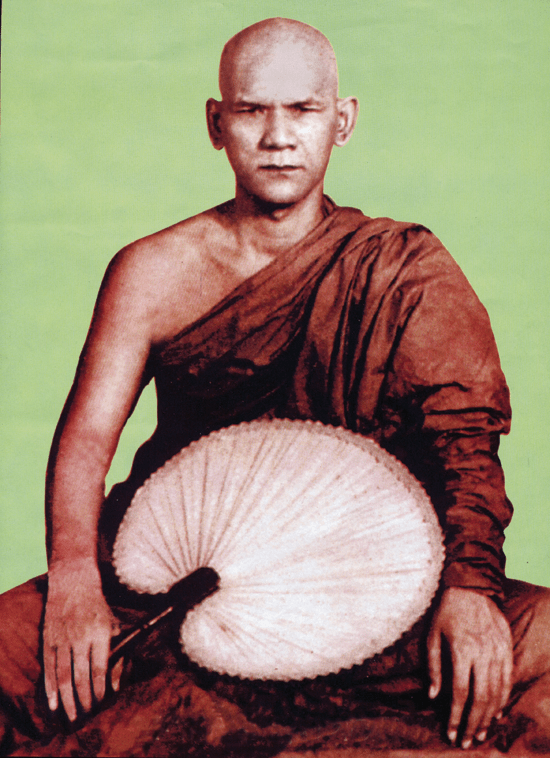
This intense and unprecedented interest of the laity in all matters of Buddhism fostered the rise of talented monks who became star preachers to the laity. They lowered the fans that traditionally covered their faces during Dharma lectures, establishing a style that soon became known as “fan down.” These preachers reached huge audiences – sometimes tens of thousands of people – and used an easily understandable and appealing style. To generate interest, some monks even adopted stage names that matched the names of well-known actors. (That would be like an American monk trying to increase his profile by calling himself Bhikkhu Brad Pitt.)
Hand in hand with preaching, printed matter appeared. Numerous printing presses were set up and cheap editions of books describing every aspect of the doctrine poured out of them. Many works were devoted to the refined philosophies of the Abhidhamma, the section of the Pali Canon that aims to schematize the characteristics of mind and reality. Never before had lay people enjoyed such access to extensive content of doctrinal instruction. They devoured everything, no matter how complex the subject, and often met in groups to study the more difficult content. The study was taken so seriously that sometimes fierce public gatherings were held to challenge the arguments of the authors. There were even book burnings.
All these activities revolutionized Buddhist life and created the conditions for the general spread of insight practice, as new ways of being Buddhist emerged alongside the old patterns under the pressure of social change triggered by colonial influence. With a strengthened sense of self as a collective whole that had emerged from a group study of Buddhist theory, the laity assumed the role of protector of the Sasana, which had previously been the duty of the king.
In the vibrant political and social landscape of early 20th century Burma, meditation became another means of protecting Buddhism. Meditative realization on an individual level strengthened the entire Sasana by improving the karma of society. At the same time, awakening, which had previously been considered unattainable in such a degenerate age, was seen as a possibility in the present life through the path of meditation. Key figures harnessed the fleeting energy of worries, agency, and knowledge of the laity – all triggered and shaped by colonial politics and attacks from missionary endeavors – to encourage them to practice.
The message spread around the world: Forget the primeval forest or the cave, meditation is possible in the city
At the forefront of these teachers was a monk named Ledi Sayadaw (1846-1923), the first among those who called for a transformed lay life that included meditative practice. In the early years of the 20th century, he explained meditation in simple words that could be integrated into a busy secular everyday life. Ledi Sayadaw, who was extremely well-known for his “fan down” teaching, was perhaps even better known for the many easily understandable yet sophisticated works he wrote on Buddhist doctrine; as one Burmese writer put it, he could “spread the Abhidhamma like falling rain.” In addition, he linked the study of the Abhidhamma with meditative practice, making learning the basis for an everyday observation of the world that could lead to liberating insight. Although he demanded in-depth study, he also emphasized that even the layperson who only studied the constantly changing nature of the four elements (Dhatus) earth, wind, fire and water could derive great spiritual benefit from it. As Ledi Sayadaw put it: “For those whose knowledge is developed, everything within and outside themselves, within and outside their house, within and outside their village and their city is an object at the sight of which insight into impermanence can arise and develop.”
Insight meditation (Vipassana) for everyone
Prior to this time, the general belief was that anyone who wanted to practice insight meditation first had to enter the deep states of concentration (Samadhi) known as Jhanas. But achieving these sublime forms of concentration required spending long periods of time away from the world in intense meditation, in the deepest proverbial primeval forest or a mountain cave. But now Ledi Sayadaw claimed that one did not have to enter such states in order to gain the mental stability for insight practice. It was excellent if one was able to do so (and Ledi Sayadaw stated that he had gone this way), but in reality all that was needed was a minimum level of concentration that enabled the meditator to continuously return to the object of contemplation from moment to moment.
This state of mind was therefore called “moment-to-moment concentration” (khanika-samadhi) and formed the basis of “pure” or “dry” insight meditation (suddha-vipassana or sukkha-vipassana), which did not involve deep concentration. Although this approach to practice was discussed in authoritative texts, no one had previously propagated it on a broad basis: Ledi Sayadaw was the first to make it the focus of his teachings. The message spread around the world: Forget the primeval forest or the cave. Meditation is possible in the city.
A few years after Ledi Sayadaw became widely known, another monastic teacher, Mingun Sayadaw (1868-1955), also propagated insight meditation based on a moment-to-moment concentration, probably to some extent thanks to Ledi Sayadaw’s teachings. Mingun Sayadaw taught meditators to grasp every moment of perception as it arises before a sense gate in order to break down all experience into a constantly changing flow of impressions. This emphasis on the perception of sensory impressions would much later lead to an understanding of mindfulness (sati), which the German-born monk Nyanaponika famously called “pure observation.” (Ultimately, the emphasis on the process of experience would lead to a secular interpretation of sati in the West, detached from the Buddhist context.) Mingun Sayadaw is also to be highlighted as the first teacher to conduct group meditation for lay people in 1911. Almost all lines of practice that have emerged from Burma go back to either him or Ledi Sayadaw.
Active practice among lay people began to spread throughout Burma thanks to the efforts of these teachers. But they did not see their techniques as innovations. Like most meditators today, they saw the Buddha as their role model and some of the earliest Buddhist texts as their guide. In the centuries after the Buddha’s death, Suttas such as the Satipatthana Sutta (“Discourse on the Foundations of Mindfulness”) and the Anapanasati Sutta (“Discourse on Mindfulness of Breathing”) were compiled in Pali and were crucial for shaping the practice – as they still are today. But these texts were not yet widespread in lay life before this time, and – as today’s meditation teachers in America and Asia readily admit – the interpretation of these texts can vary greatly. Some Sri Lankan monks, for example, have criticized Mingun Sayadaw’s method (as taught by his student Mahasi Sayadaw [1904-1982]) as not canonically substantiated – in other words, as an invention. Just as the development of a practice like the meditation of entire masses of people arose under certain conditions, so too did the interpretations of key texts for Vipassana practice develop within the same environment and under similar pressures.
By the 1930s, large numbers of lay people had taken up the methods taught by Ledi Sayadaw and Mingun Sayadaw, as a new turbulent period in Burmese history began. Rebellions by rebels, political turmoil caused by the merging and breaking of nationalist groups, economic hardships of the Great Depression (especially a sharp drop in rice prices) and inter-ethnic unrest revived efforts to practice.
Ledi Sayadaw died in 1923, but many of his students took active roles in teaching insight practice in the 1930s. Of particular importance was the lay teacher U Po Thet, known as Saya Thetgyi (1873-1945), who was instrumental in developing insight meditation into a global phenomenon and is considered one of the first examples of a lay person authorized by a monk to teach Vipassana meditation. Ledi Sayadaw even approved of Thetgyi teaching monks, a complete reversal of the usual roles of monk and layperson.
Ledi Sayadaw’s public approval led to a line of lay teachers following Thetgyi. Although he did not ordain as a monk, Thetgyi took up residence away from his wife and children to lead a celibate life dedicated to meditation. His most important student, U Ba Khin (1899-1971), on the other hand, was a family man with six children and a career as a government official. He would eventually assume the position of head of accounting for the newly independent Burmese Union, which was liberated from colonial rule in 1948. U Ba Khin’s merging of active lay life and insight practice meant going a step further than his teacher, towards a fully lay-supported orientation of meditation as a practical, even secular undertaking – even so secular that in the 1950s U Ba Khin propagated the ability of meditation to rid the body of radioactive toxins, a widespread concern at the beginning of the atomic age.
State-paid leave for meditation
After Burma gained independence, the new Burmese government, led by Prime Minister U Nu, used the growing interest in insight meditation as part of a broader political strategy that sought to unite the country with the help of Buddhism. The 1950s were years of transformation through the renewal of Buddhism in Burma. From 1954 to 1956, the government held the Sixth Buddhist Council, an event that sought to bring together Theravada monks from all countries to check the Pali Canon for errors in text transmission. In reality, the council was essentially limited to Burmese, but the government used the event to present itself on the world stage as a prominently Buddhist country. At the same time, guidelines were established for funding meditation centers and policies that allowed government employees to take unpaid leave to meditate. Insight practice was officially promoted not only as a means to personal awakening or to preserve the Sasana, but also as a patriotic endeavor and source of national identity. In less than 75 years, from 1886 to the mid-1950s, meditation had grown from an occupation of a few in the population to a duty of the ideal citizen.
U Ba Khin’s efforts contributed to this newly revived spirit, but U Nu officially advocated for Mahasi Sayadaw, who had deeply impressed the Prime Minister when they met a few years earlier. In 1949, the government appointed Mahasi Sayadaw as head of the Thathana Yeiktha Meditation Center in Yangon, which soon became by far the largest in Burma. Just a few years later, in 1952, U Ba Khin founded his International Meditation Center, also in Yangon. From these two teachers and their centers, the methods that have individually or in combination shaped forms of meditative insight practice have spread throughout the world.
The Mahasi technique was brought to Sri Lanka by Burmese teachers in 1956 and introduced to Thailand in the same period. Mahasi Sayadaw himself traveled extensively throughout Asia and the West, promoting the mindfulness technique that would become an independent movement in Western hands. U Ba Khin taught numerous students at his center, including many who later became influential teachers in the West, such as Daw Mya Thwin (known as Sayamagyi or “Mother”), Ruth Denison, Robert Hover, and John Coleman. Starting in 1956, U Ba Khin also taught a Burmese citizen of Indian descent, the famous teacher S. N. Goenka (1924-2013), who emigrated to India in 1969. Goenka eventually built a network of over 120 meditation centers around the world, which continue to instruct many thousands of meditators each year.
How Vipassna Meditation Came to the West
At the same time that Burmese meditation teachers were turning to the world, the world was also turning to Burmese teachers. Driven by spiritual seeking that reflected the longings of many young seekers of the 1960s, Joseph Goldstein, Jack Kornfield, and Sharon Salzberg independently encountered the teachings in the lineages of Ledi Sayadaw and Mingun Sayadaw. Kornfield would also incorporate the teachings of the Thai Forest Tradition of Ajahn Chah and reflect on them in his teaching approach. These three Americans became what scholar Wendy Cadge has called the most important “reverse couriers” who brought insight meditation to the West, particularly by founding the Insight Meditation Society (IMS) in Massachusetts and the Spirit Rock Meditation Center in California. Ironically, the ancient wisdom they had sought for the West—authentic meditation teachings and practices—had already been permanently altered decades earlier by colonial influence.
Ideas about meditation naturally continue to reflect the needs, hopes, and fears of practitioners at different times and in different places. Today, meditation thrives in a way that is far removed from the Burmese cultural framework of its original design about a century ago. The emphasis on mindfulness (sati) as mere attention, such as in America, derives primarily from the line of teachings of Mingun Sayadaw, but at the same time signals a distinctly Western secularization of the practice that favors a therapeutic model. This secular form of meditation has found a powerful new source of inspiration and tasking in exchange with psychology.
The continuous transformation processes within insight meditation point to a powerful and possibly liberating fact: meditation does not really exist. At least not as a single, unchangeable entity. Instead, there are only the many interpretations and methods of practice that are interconnected through conditionally arisen connections over time. This can be seen as a powerful affirmation of the fundamental Buddhist teaching of impermanence. If impermanence is understood as determined by the causal forces of dependent arising, life behaves from a Buddhist perspective in a deeply ironic way. For, as this shortened family tree of insight meditation shows, a meditator’s liberation is shaped from the very events and desires that bind one to the painful cycle of rebirths.
German translation by Buddhastiftung with kind permission from Tricycle. Originally published as “Meditation en Masse” by Eric Braun in Tricycle: The Buddhist Review, vol. “Spring 2104”, tricycle.org